Tuesday, December 29, 2020

Move cancer patients to front of COVID-19 vaccine line - New York Post

As COVID vaccines are being rolled out, an extremely vulnerable group is being overlooked: millions of cancer patients. Doctors are sounding the alarm that many state governments and the federal advisory committee charged with prioritizing who gets vaccinated should move cancer patients up to the front of the line, right after nursing-home residents and frontline health workers. Right now, they’re deemed a lower priority than “essential workers,” such as firefighters, mass-transit employees, possibly even supermarket clerks.
Yet cancer patients are getting decimated by COVID-19. New data from 360 US hospitals show that cancer patients are more at risk of catching the disease than the rest of the population. Once infected, they are nearly twice as likely to need hospitalization.
Even worse, they are three times as likely to die as other hospitalized COVID-19 patients, according to the new findings in the journal JAMA Oncology.
New York pulmonologist Daniel Libby explains that cancer patients probably get infected frequently because they tend to visit doctors’ offices. Also, their “defenses are low,” meaning their immune systems are weaker.
This week, the COVID Lung Cancer Consortium, a group of oncologists, is calling on the feds to reexamine priorities and pay “specific attention to this vulnerable population.”
Gov. Cuomo should do the same. Last week, Cuomo launched the “Vaccine Equity Task Force,” including immigrant advocates, civil-rights leaders, tenant associations, labor groups and churches, most of which are political allies of the governor. But not one cancer organization made the list.
“We’re now talking about who’s getting vaccinated, and let me be clear, there is no politics in the vaccination process,” Cuomo says. That’s hard to believe, governor, considering who’s on the task force and who’s missing.
In New York and most states, cancer patients are getting ignored. The American Society of Clinical Oncology and the American Cancer Society urged the federal advisory committee to make vaccinating cancer patients a top priority, but the committee’s recommendation, announced Dec. 20, prioritized essential workers and people ages 75 and over to be next in line. That means most cancer patients have to wait months longer.
Fred Hirsch, a renowned lung-cancer specialist at Mount Sinai Medical Center, is investigating whether cancer patients’ weakened immune systems will cause them to produce fewer antibodies when vaccinated.
They may need more vaccinations — three shots or even four, instead of the two shots currently prescribed for the Pfizer and Moderna vaccines. All the more reason to get them started.
Meanwhile, in New York, politically connected unions representing transit workers and supermarket employees are calling state officials and pushing to be considered “essential workers.”
But cancer doctors complain they’re in the dark about whom to call or when they’ll have vaccines. Ditto for doctors treating patients with other illnesses. A Westchester woman tells me she’s worried about her husband. He’s 71, with type one diabetes and two heart stents, and he commutes to Gotham on Metro North. His doctors don’t know when they will get vaccines. She says, “I can’t believe 20-year-old supermarket workers will get it before him.”
Both the federal vaccine committee and Cuomo defend prioritizing “essential workers,” because it will mean vaccinating more minorities. Cuomo claims that “black, Hispanic, Asian and low-income communities paid the highest price during COVID-19.” That’s a politically convenient exaggeration.
Minorities have been only slightly more impacted by COVID than other people, according to the data. In New York state, excluding the Big Apple, Hispanics constitute 12 percent of the population and 12 percent of COVID deaths, while blacks make up 9 percent of the population and 15 percent of the deaths. In New York City, blacks and Hispanic minorities have suffered more fatalities proportionally than whites, but only by a few percentage points. Asians experienced fewer deaths (7 percent) than their 14 percent share of the population.
COVID is an equal-opportunity killer. It is slaughtering cancer patients, no matter their skin color.
Betsy McCaughey is a former lieutenant governor of New York.
"front" - Google News
December 30, 2020 at 07:15AM
https://ift.tt/2WRl8wp
Move cancer patients to front of COVID-19 vaccine line - New York Post
"front" - Google News
https://ift.tt/3aZh1mr
https://ift.tt/3b2xvu5
Notre Dame now more physical across the front - Dothan Eagle
[unable to retrieve full-text content]
Notre Dame now more physical across the front Dothan Eagle"front" - Google News
December 30, 2020 at 04:29AM
https://ift.tt/3px7nz9
Notre Dame now more physical across the front - Dothan Eagle
"front" - Google News
https://ift.tt/3aZh1mr
https://ift.tt/3b2xvu5
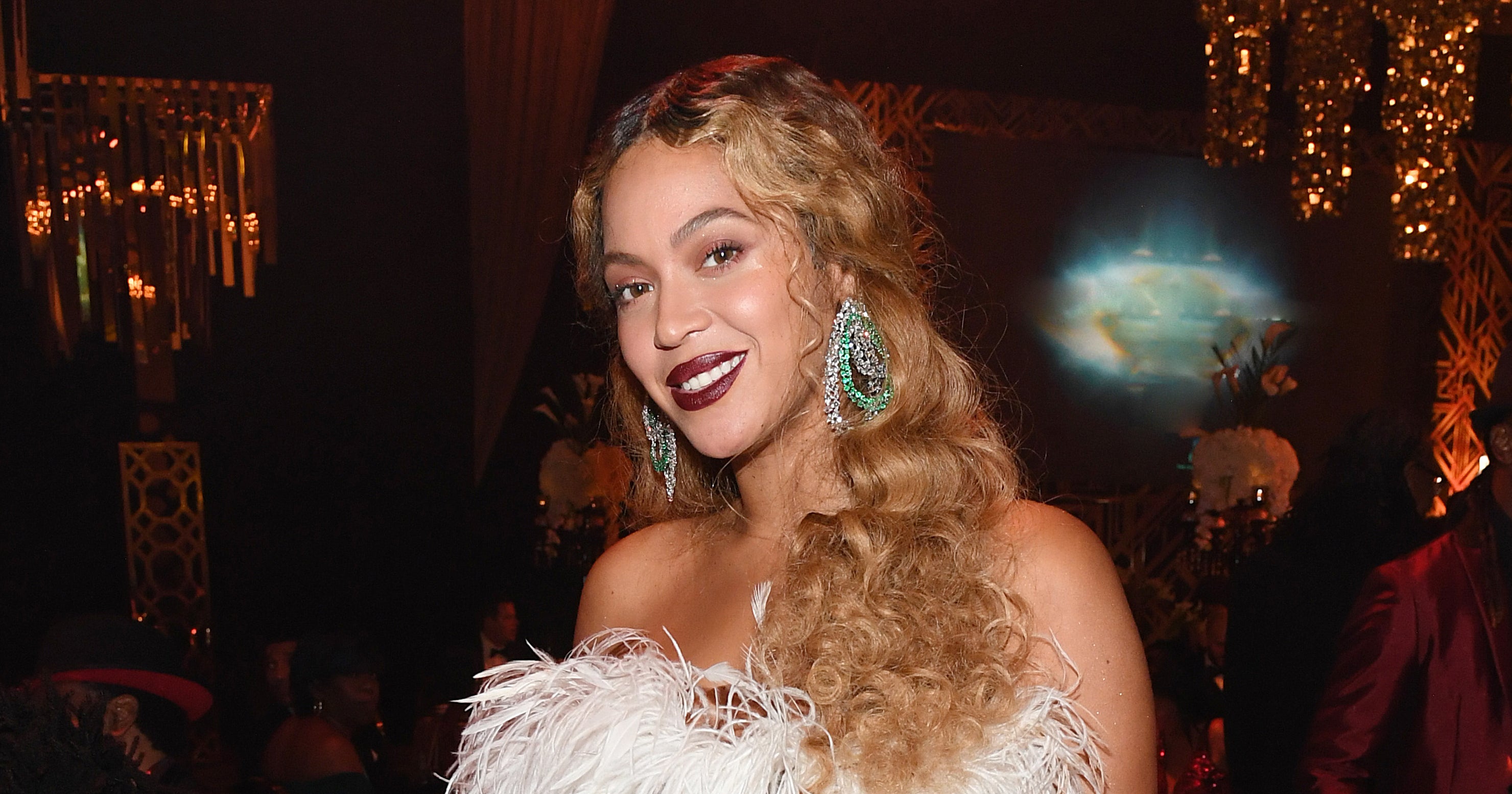
Beyoncé’s Holiday Gift Is A Massive F*ck You To 2020 - Refinery29
"middle" - Google News
December 30, 2020 at 02:46AM
https://ift.tt/37XENB2
Beyoncé’s Holiday Gift Is A Massive F*ck You To 2020 - Refinery29
"middle" - Google News
https://ift.tt/2MY042F
Shoes Man Tutorial
Pos News Update
Meme Update
Korean Entertainment News
Japan News Update
Wonder Woman 1984: The Middle Eastern stereotypes should have stayed in the 1980s. - Slate Magazine
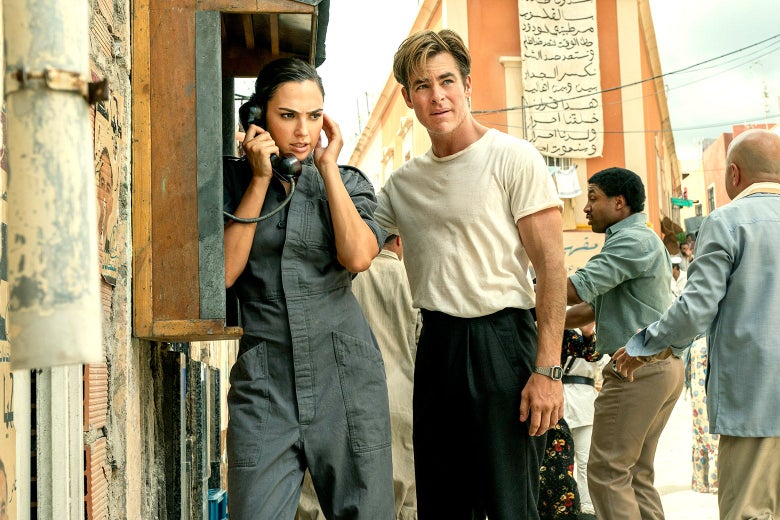
This article contains spoilers for Wonder Woman 1984.
When Indiana Jones and the Temple of Doom was released in May of 1984, reviewers were nearly unanimous in their praise. The New York Times’ Vincent Canby described it as “endearingly disgusting … like spending a day at an amusement park,” and Roger Ebert’s four-star rave called it “one of the most relentlessly nonstop action pictures ever made.” It was only in July, when the National Asian American Telecommunications Association and the advocacy group Chinese for Affirmative Action issued a joint statement calling the film—in particular the characters of Shanghai crime boss Lao Che, Chinese child sidekick Short Round, and the Indian Thuggee cult, led by high priest Mola Ram—“racist in [its] portrayal of Asian people” that the conversation about the film’s rampant orientalism began to shift.
As David Sterritt, one of few critics to note Temple of Doom’s racism in his initial review, wrote, Steven Spielberg’s celebration of 1930s adventure serials had sucked up the era’s racist stereotypes as well. “Today’s filmmakers are steeped in movies of the past,” Sterritt wrote, “fond of reviving and rehashing old Hollywood conventions, including some that there’s no reason to be proud of.”
Like the Indiana Jones series, Wonder Woman 1984 is consumed by affection for the movies of an earlier time—and like Temple of Doom, it revives the era’s noxious ethnic stereotypes along with its Members Only jackets. Almost four decades after Sterritt wrote those words, WW84 shows how little has really changed when it comes to Hollywood’s treatment of other countries and other cultures, in particular those of the Middle East and North Africa. A decade after the Iranian Green Movement and Arab Spring, WW84 indulges a view of Middle East and North Africa, or MENA, that bears little resemblance to its myriad and unique identities, in the 1980s or now.
The first reviews of WW84 (which, director Patty Jenkins said, was set in that Orwellian year because it was “the height of Western civilization [and] our current modern belief system”) spoke glowingly of its optimistic script, Gal Gadot’s magnetism, and the zaniness of supporting work from Pedro Pascal as Trumpian villain Maxwell Lord and Kristen Wiig as archaeologist-turned-apex predator Barbara Minerva. Writing for Vulture in an early dissenting opinion, Angelica Jade Bastién mentioned the film’s “genuinely weird accounting of Middle East politics,” but barely any other initial reviews mentioned the Egypt storyline that drives the film’s second major action sequence. It was only when viewers started streaming the film on Christmas Day and started posting their reactions to social media that a different consensus began to emerge.
Many elements of WW84 feel like deliberate homages to both the ’80s and its movies. The opening obstacle course during which the young Diana learns the importance of truth has elements of Chariots of Fire; the mall where Diana saves two girls from jewelry store robbers evokes the pleasant capitalist buzz of Fast Times at Ridgemont High and Bill& Ted’s Excellent Adventure; the body possession storyline that allows Chris Pine’s Steve Trevor to reunite with Diana was a common feature of ’80s comedies like All of Me. The decade’s tropes have become so commonplace in the ensuing decades of pop culture—Stranger Things did the mall thing; Freaky did the body swap thing—that viewers are able to spot them, nod in polite recognition, and move on.
The same tolerance shouldn’t be extended to the film’s derivative approach to the Middle East, an ugly blast from the past that could have stayed in the ’80s alongside Indy shooting that Arab swordsman in Raiders of the Lost Ark, Doc Brown fleeing Libyan terrorists in Back to the Future, and Chuck Norris saving hostages from Lebanese kidnappers in The Delta Force. Jenkins and her co-writers Geoff Johns and David Callaham craft their version of Egypt and the grander MENA region out of the same oversimplifications we’ve heard about this part of the world for years. It’s a strange about-face for the franchise given how 2017’s Wonder Woman acknowledged prejudice against MENA people with the character of Sameer (Saïd Taghmaoui), a soldier who had to give up his acting dreams because “I’m the wrong color.” WW84’s clichés might feel as integral to the period as fanny packs and leg warmers, but breathing new life into orientalism and Islamophobia is a little more unforgivable than a fashion faux pas.
In his quest for world domination, Pascal’s Maxwell Lord visits Emir Said Bin Abydos (Amr Waked), an Egyptian oil magnate whose holdings Lord plans to seize in exchange for granting a wish with the ancient magic stone he now controls. But apart from a magazine cover identifying the emir as the “King of Crude,” it’s not really clear who the character is supposed to be. The movie presents him as a monarch, and he is referred to as “your highness,” but Egypt was a democracy in the 1980s. What’s more, emir is a Muslim term that hasn’t been used to describe Egyptian leadership in a thousand years; emir is nearly exclusively a descriptor used in countries like Saudi Arabia and the United Arab Emirates. His character’s costume, like his identity, is confused, with a headscarf and a three-piece gray pinstriped suit underneath an open blue robe with gold trim. Although traditional Egyptian male dress includes garments like the binish, a long, dark overcoat, the emir’s look is more in line with the styles of Saudi Arabia or the UAE, where it is customary to pair a head wrap (shemagh) with long robes (thobe). (At the time, Egyptian President Hosni Mubarak often appeared in tailored suits.) The women of WW84’s Cairo, including a young girl who Diana saves from a speeding truck, all wear hijabs and niqābs, but during that period in Egyptian history, wearing those items was actually a topic of widespread debate as the country struggled to determine how much of a role the Islamic faith was to take in public life.
None of this is to say that showing characters in a binish, or a shemagh and thobe, or a hijab and niqāb, is inherently wrong. But in too many American films, these costume choices are tied to regressive characterizations that serve to elevate Western ideologies above those of MENA countries, leaving WW84’s retrograde portrait of Egypt more in line with Temple of Doom’s Thuggees than with actual Egyptians. Add to that how the emir tricks Lord by selling the Saudis oil the American businessman had hoped to acquire for himself and his one true wish being the expulsion of all “heathens” from his country, a desire that causes the creation of a “Divine Wall” that keeps Egypt’s poorest citizens from clean water. Theories popped up on Twitter over the weekend suggesting that it’s the emir, and not Lord, who is the film’s Donald Trump stand-in because his “Divine Wall” is an analogue for the Mexican border wall, but having the emir use “heathens” as a descriptor is a deliberate evocation of Middle Eastern leaders as Islamic zealots. That isn’t even touching upon the tone-deaf scene in which Gadot, an Israeli actress who served in the Israel Defense Forces, saves two Egyptian children playing soccer from an incoming truck. The film doesn’t want you to remember Gadot’s July 2014 Facebook post in support of the IDF a week after an Israeli strike on Gaza killed four Palestinian boys who were, in an uncomfortable alignment with WW84, playing soccer at the time of their deaths. (Lebanon responded to Gadot’s comments by banning the first Wonder Woman, which one group referred to as “the Israeli soldier film.”)
WW84 continues this strange rearranging of historical fact when the narrative leaves Egypt. When an Iraqi man tells Lord, “The Soviets have sided with Iran. Iraq is preparing to defend ourselves, as unrest spreads,” Lord grants his wish by giving him weapons to defend his country. No matter that 1984 was the middle of the Iran-Iraq War, during which both the U.S. and the USSR backed Iraqi President Saddam Hussein, who didn’t need the assistance of a magic stone to purchase fighter jets, combat helicopters, mortars, tanks, guns, missiles, and thousands of other arms from the Soviet Union. Why even include this throwaway character? Or another scene later on, when a well-to-do white woman in D.C. ushers her husband inside their apartment, telling him, “There’s a riot at the Saudi Embassy.” The entire world seems to be descending into chaos, but the only specific place that gets a mention to hammer home how bad everything has gotten is a location populated by brown people.
In its final act, WW84 sees Diana face off against Lord and Minerva so that she can save the world from a nuclear war between the U.S. and the USSR—a tension that develops after they align themselves on opposite sides of the Egyptian “Divine Wall.” It’s only through the intervention of white feminist icon Wonder Woman that the potentially civilization-ending conflict sparked by the wishes of MENA characters is averted. Why does a movie that gives its heroine multiple monologues about the importance of truth traffic in so many mistruths about an already-maligned region? The film’s inaccuracies in how it represents the Egypt of the 1980s and the causes and complexities of the Iran-Iraq War maintain a skewed perception of a corner of the world that has been villainized, misrepresented, or condescended to for years in Hollywood films of all genres. In his 1988 book Cruel and Unusual: Negative Images of Arabs in American Popular Culture, Laurence Michalak noted, “One major reason why the ‘Arab’ has come to represent ‘otherness’ is probably that Arabs are the major world people that Americans know least about,” and his observation can be expanded to include not only Arabs but all ethnicities across the 19 countries that make up MENA who are pigeonholed by movies like this one.
To see Wonder Woman 1984, so committed to world building when it comes to the Amazonian island nation of Themyscira and so enamored of its message of honesty as a great unifier, continue the othering of cultures and peoples long disserved and mischaracterized by Western cinema is a reminder of the hollow promises of representation as offered by the corporate entertainment behemoths pouring hundreds of millions of dollars into these films. There should be more to inclusion than the superficial morsels WW84 ultimately offers, which are awkwardly executed across the board: putting dreadlocks on an Indian actor playing a Mayan character, making a Black homeless man a representation of Minerva’s conscience. Indulging in the neon fashions and synth-y sounds of the decade is harmlessly silly nostalgia, but the film’s embrace of the MENA stereotypes of the 1980s is recklessly ignorant. Racism didn’t need a 2020 comeback.
"middle" - Google News
December 30, 2020 at 03:53AM
https://ift.tt/3rACH1H
Wonder Woman 1984: The Middle Eastern stereotypes should have stayed in the 1980s. - Slate Magazine
"middle" - Google News
https://ift.tt/2MY042F
Shoes Man Tutorial
Pos News Update
Meme Update
Korean Entertainment News
Japan News Update
Robbery suspect detained in front of Henry Mayo - Santa Clarita Valley Signal

Emily Alvarenga
Emily Alvarenga covers features and business for The Signal. She's new to the paper and Santa Clarita, but hasn't moved far from her hometown of Temecula, California. Emily graduated from San Diego State University in 2017 and has been writing and reporting since high school.
"front" - Google News
December 30, 2020 at 06:20AM
https://ift.tt/3nYlMUN
Robbery suspect detained in front of Henry Mayo - Santa Clarita Valley Signal
"front" - Google News
https://ift.tt/3aZh1mr
https://ift.tt/3b2xvu5
US Attorney for Middle District Announces Resignation | The Legal Intelligencer - Law.com
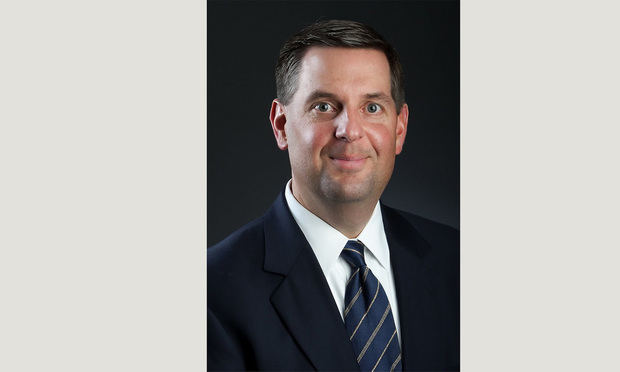 U.S. Attorney for the Middle District of Pennsylvania David Freed. (Photo: Courtesy Photo)
U.S. Attorney for the Middle District of Pennsylvania David Freed has announced his resignation. The announcement marks the first federal law enforcement head to do so from Pennsylvania as President Donald Trump’s presidency begins to wind down.
"middle" - Google News
December 29, 2020 at 08:49PM
https://ift.tt/34QkfIG
US Attorney for Middle District Announces Resignation | The Legal Intelligencer - Law.com
"middle" - Google News
https://ift.tt/2MY042F
Shoes Man Tutorial
Pos News Update
Meme Update
Korean Entertainment News
Japan News Update
Postingan Populer
-
JERUSALEM — West Bank settlement construction surged during the first year of the Trump presidency, an Israeli monitoring group said Sund...
-
worldinmiddleeast.blogspot.com * This post contains affiliate links and we may earn a small commission if you use them. The Play-Doh Wheel...

