Rechercher dans ce blog

Tuesday, September 1, 2020

Tossing Lines: 'Gimme Shelter' background vocalist now front and center - theday.com

worldinmiddleeast.blogspot.com

Sometimes backstories are as entertaining as the songs themselves.

With classic rock playing in the background, I was putzing about the kitchen when the famous opening riff to the Rolling Stones’ “Gimme Shelter” from 1969 rose from Alexa, Amazon’s magic little music machine. It jolted me into the past. Of course, I cranked it up in tribute.

As the music reached its crescendo, I wondered, for the first time since the song was released 50 years ago, about the remarkable background singer belting out that iconic, scorching, gospel-tinged vocal behind Mick Jagger. Her performance was as much a symbol of the sixties as anything else.

I discovered she is a talented, gutsy survivor.

“Gimme Shelter” is the apocalyptic anthem of the 1960s, its foreboding lyrics reflecting dark tension: “Ooh, see the fire is sweepin’, our very street today,” “War, children, it’s just a shot away,” and “Rape, murder, it’s just a shot away.”

Newsweek described the song as “ecstatic, ironic, all-powerful, an erotic exorcism for a doomed decade.”

The song first came to Keith Richards as he sat looking out the window of an apartment in London, exploring the opening riff on his guitar. It was a dark, stormy day, a monsoon, and Richards watched “all these people with their umbrellas being blown out of their grasp and running like hell. My thought was storms on other people’s minds, not mine.”

The young woman who lit up the refrain with her fiery delivery is Merry Clayton.

Born on Christmas Day (hence, “Merry”) in New Orleans, she was the daughter of a baptist minister, who raised her on the Bible and gospel music. She sang in the church choir.

The family moved to Los Angeles when Clayton was young, where she began her recording career in 1962 at the age of 14, singing a duet with Bobby Darin. She became one of Ray Charles’ Raelettes in the sixties, and studio producers knew her voice well.

Finishing up their album “Let It Bleed,” The Rolling Stones were in an L.A. studio working on “Gimme Shelter” when they decided they needed a female voice. Producer Jack Nitzsche called his friend Merry Clayton.

Clayton was just 20 years old, married, and very pregnant when she sleepily rolled over and picked up the phone.

She reluctantly agreed to help, but due to the late hour, she wasn’t about to change her clothes.

In an NPR interview years later, Clayton said: “I’m wearing these beautiful pink pajamas, my hair was up in rollers. But I took this Chanel scarf, wrapped it round the rollers so it looked really cute, went to the bathroom and put on a little lip blush — ‘cos there’s no way I’m going to the studio other than beautiful!” She threw a fur coat over her night clothes.

Clayton arrived at the studio, where she met Keith Richards and Mick Jagger for the first time (in her curlers and pajamas!).

Jagger handed her the odd lyrics. She later recalled: “I’m like, ‘Rape, murder…’? You sure that’s what you want me to sing, honey? He’s just laughing, him and Keith.”

She banged the song out in three takes. “So it was three times I did it, and then I was gone. The next thing I know, that’s history.”

The song’s darkness continued when, upon returning home, Clayton suffered a miscarriage and lost her baby. Some think it was the punishing performance she provided in the studio.

A Grammy nominee, she went on to record and perform with every major music star in following decades: Barbara Streisand, Linda Ronstadt, Carole King, Michael Jackson, Aretha Franklin, Diana Ross, and so many others.

“Gimme Shelter” became the title track of her debut solo album, released in 1970. Along with her recording career, she became a movie and television actress.

Then, in June 2014, darkness struck again. Clayton was severely injured in a car collision, losing both of her legs at the knees.

“Oh my God, I was at the pinnacle — I was at the top of my game,” she said of her life at the time of the accident. She spent five months in the hospital.

Clayton drew the strength to survive the tragedy from her lifelong faith. Now in her early seventies, she still lives in California.

When she received the Clark & Gwen Terry Award for Courage at the Jazz Foundation of America’s “A Great Night in Harlem” gala at the Apollo Theater in 2015, Keith Richards noted the occasion with a live performance of “Gimme Shelter.”

That courageous, feisty, spiritual woman in her pajamas at midnight pulled the world’s angst from her soul, giving the Stones’ anthem for the violent sixties exactly what it needed. Thank you, Merry Clayton.

Say it with me: “Alexa, play ‘Gimme Shelter!’” Now, crank it up.

John Steward lives in Waterford. He can be reached at tossinglines@gmail.com.

Let's block ads! (Why?)


"front" - Google News
September 01, 2020 at 11:01PM
https://ift.tt/2GfXIeV

Tossing Lines: 'Gimme Shelter' background vocalist now front and center - theday.com
"front" - Google News
https://ift.tt/3aZh1mr
https://ift.tt/3b2xvu5

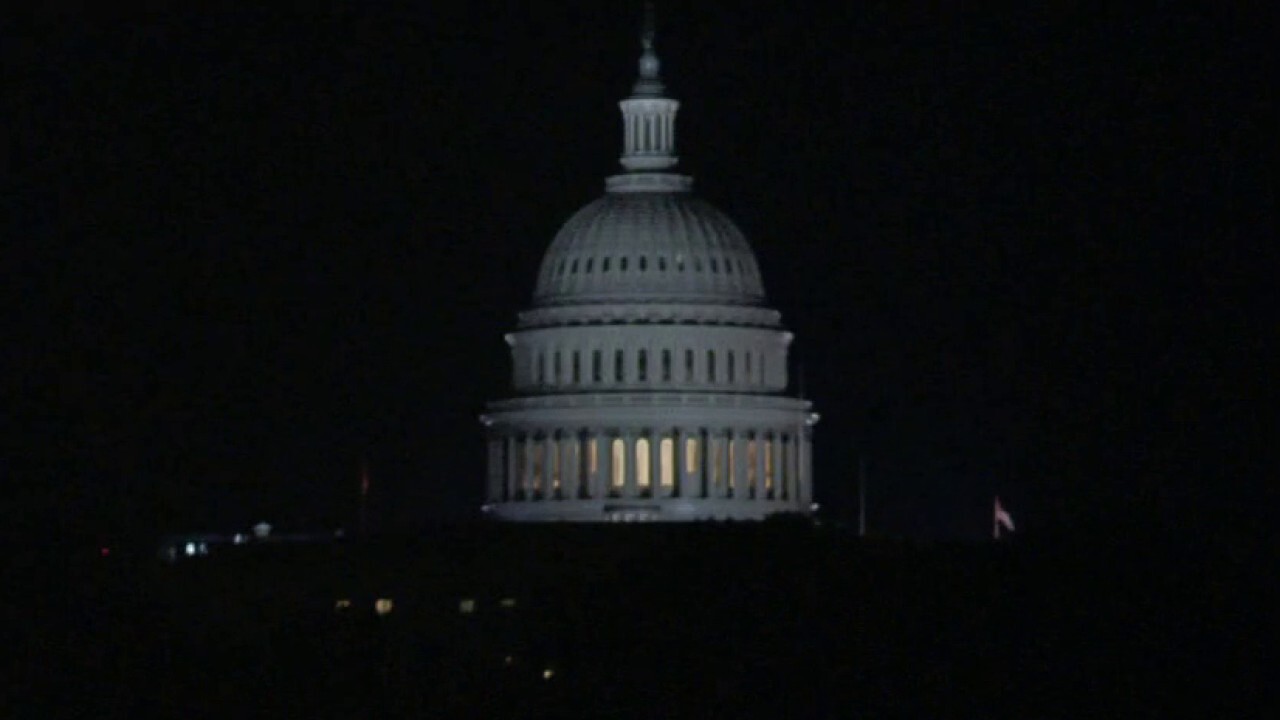
House of Horrors: Could deadlocked Congress force government shutdown in middle of pandemic? - Fox News

You thought August was bad this year? Well, try September. Or worse yet, October.

Halloween descends on the rest of the world at the end of October.

ARE WHITE HOUSE, PELOSI RESUMING CORONAVIRUS STIMULUS TALKS?

In Washington, D.C., the ghouls and goblins come out in late September.

That’s because Sept. 30 is the annual deadline to fund the federal government. It's the end of the government’s fiscal year. And, the calendar always raises the specter of a possible government shutdown.

The House approved 10 of the 12 annual spending bills. It’s doubtful those measures could ever become law. The Senate hasn’t approved any bills.

This leaves us with the prospect of some sort of stopgap bill to avert a shutdown. And if Congress and President Trump can’t come to terms with that, you face the worst-case scenario of all: the very real prospect of a government shutdown in the middle of a pandemic.

This is grim.

An interim measure simply renews all federal spending at the current level. But there are discussions as to how long such an emergency plan would run. Congressional Republicans would prefer a bill that lasts until mid-December. A new Congress won’t take office until January. GOPers are mindful that the Senate is in play and it’s possible they could face a President Biden next January. It behooves Republicans to opt for a patchwork bill until late fall. Then Trump and current Republicans can assert themselves into the current spending round.

Naturally, Democrats prefer to pass a bill this month that keeps the lights on until February or March. Democrats like their chances of flipping the Senate and booting Trump from office. If that’s the case, Democrats are more than happy to tackle vexing spending questions with a unified government in 2021 – and not have to rely on Trump and Senate Majority Leader Mitch McConnell, R-Ky.

But Congress is divided. And with Trump, it’s hard to know exactly what he will sign and demand. That’s what helped lead to the 2018-2019 government shutdown over the border wall. Don’t forget that McConnell – and most senators from both parties – thought the White House signaled a green light to approve an interim spending bill in December 2018. So, the Republican-controlled Senate passed the measure late one night. Trump incinerated it by dawn.

FLASHBACK TO 2019: LONGEST-EVER GOVERNMENT SHUT DOWN SEES NO END 

This is what gives people nightmares. A macabre political scenario involving a government shutdown in the middle of the worst pandemic in more than a century. Project this against the backdrop of virtually no talks about coronavirus legislation. House Speaker Nancy Pelosi, D-Calif., and White House chief of staff Mark Meadows talked by phone last week for 20 minutes. But one would be hard-pressed to find a conversation more barren of results than that chat.

Under normal circumstances (but remember, this is 2020, where nothing is normal), Congress would likely punt to the fall or next year on the spending package and Velcro some other major legislative item on top. In other words, a coronavirus relief bill could serve as a “rider” on the spending plan. Or, considering the sheer size of a potential coronavirus package, maybe it’s the spending bill that rides atop the relief measure. Deadlines do matter on Capitol Hill and often compel action. But there is almost no consensus on any sort of coronavirus relief bill.

WASHINGTON IMPASSE ON CORONAVIRUS RELIEF THREATENS US ECONOMY

Trump recently indicated he was willing to accept a coronavirus package totaling $1.3 trillion. But Democrats are still stuck in the $3 trillion range. Any plan needs lots of Democratic votes. That’s because a large chunk of Senate Republicans oppose any major coronavirus measure.

A coronavirus bill could be a sweetener for the appropriations package. But attaching a measure of that dimension and size to a stopgap spending bill could also be the political equivalent of syrup of ipecac.

There are only nine days on the calendar this month where the House and Senate will both meet. This may get ugly.

That said, Senate Republicans have held conference calls almost daily to try to forge agreement on a narrow coronavirus bill. There is some hope among Republicans to consider that on the Senate floor next week. But it’s unclear if GOPers can come together. And, they would need Democrats to avoid a filibuster. Republicans can’t put a bill on the floor if it can’t even command a majority of their own conference.

Otherwise, the deeper they get into the month, attention will turn to funding the government. Or, funding the government and attaching some coronavirus aid.

“The calendar sets the agenda,” said one congressional source.

Lawmakers from both sides often frown on a provisional spending plan. Known as a “continuing resolution” or “CR” in Congress-ese, such a plan bars agencies from initiating new programs or spending. The Defense appropriations bill is always the largest of the 12 annual appropriations packages. So, freezing Pentagon spending is particularly problematic.

If Democrats win the Senate and the presidency, expect spending to rise next year. That’s especially true if Congress remains stymied over a coronavirus relief measure and the pandemic continues to rage. And if Republicans hold the Senate and voters reelect Trump, the sides will continue to fight. Few political observers believe the House is legitimately in play. Republicans have long asserted they wish to trim spending. But spending continues to skyrocket – even on the GOP’s watch.

The pandemic, of course, is the “X factor” when it comes to a government shutdown. Certainly, there may be disagreements over coronavirus legislation. But maybe the pandemic actually diminishes the chances of a shutdown. Perhaps cooler heads prevail, understanding the catastrophic consequences of a shutdown during coronavirus. It’s possible.

Meadows is another “X factor.” It was generally thought that co-Freedom Caucus founder Mick Mulvaney enhanced chances of a shutdown when the president named him acting chief of staff in late 2018. Mulvaney and Meadows are cut from the same cloth, leading the Freedom Caucus. Meadows is in place to craft a deal. Yet, many on Capitol Hill view Meadows as a political arsonist from his time with the Freedom Caucus.

It’s clear Pelosi has little use for Meadows. She regularly feigns ignorance of his surname, derisively referring to the White House chief of staff as “what’s his name” and “whatever his name is.”

Maybe this means the sides can negotiate nothing successfully in September. The possibility of a government shutdown looms each year at this time. But solving the puzzle this year is particularly problematic.

September could indeed be a house of horrors. And just like when people go to a haunted house, everyone searches for a way out.

Let's block ads! (Why?)


"middle" - Google News
September 01, 2020 at 10:22PM
https://ift.tt/32FH8wE

House of Horrors: Could deadlocked Congress force government shutdown in middle of pandemic? - Fox News
"middle" - Google News
https://ift.tt/2MY042F
Shoes Man Tutorial
Pos News Update
Meme Update
Korean Entertainment News
Japan News Update

Bedford Middle School Releases Information On Fall Sports Season - WBIW.com

(BEDFORD) – Bedford Middle School Principal Lucas Calhoun released information on the middle school fall sports season. 

“Like you, we are so excited about these events and before we see our student-athletes compete, we wanted to touch base with you about spectator procedures for those attending athletic events,” Calhoun said.

Because of COVID-19, school officials are required to limit the crowd size at all athletic events.  As a result, each student-athlete will get a specific amount of vouchers that can be used to purchase tickets at the athletic event. 

Spectators possessing a voucher will be able to purchase a ticket at the gate. Each sport will have a different amount of vouchers. There will be no general admission tickets sold for football or volleyball. Without a voucher, you will not be allowed to purchase a ticket.  

While at the game, spectators are asked to ward mask and practice social distancing as much as possible.

For football, there may be space on the grass around the track for spectators to bring a lawn chair if they choose. 

“We appreciate your patience and cooperation as we continue to navigate these unprecedented circumstances,” Principal Calhoun added. “Thank you for supporting BMS and our student-athletes.”

If you have any questions, don’t hesitate to reach to officials at the Bedford Middle School at 812-279-9781. 

Print Friendly, PDF & Email

Let's block ads! (Why?)


"middle" - Google News
September 01, 2020 at 05:53PM
https://ift.tt/3lFEv6v

Bedford Middle School Releases Information On Fall Sports Season - WBIW.com
"middle" - Google News
https://ift.tt/2MY042F
Shoes Man Tutorial
Pos News Update
Meme Update
Korean Entertainment News
Japan News Update

Retail's pandemic imperative: Reinventing the front end - Retail Dive

worldinmiddleeast.blogspot.com

The coronavirus pandemic is fundamentally changing the way people shop; not just now, but for the foreseeable future. And as with any seismic shift, opportunity abounds.

Shoppers are making fewer trips, but those trips are list-driven, faster and more calculated. And they’re resulting in bigger baskets. Even in c-stores, shoppers are making fewer visits, but spending more. The pandemic is also accelerating certain behaviors, like the increased adoption of online shopping, home delivery and click and collect.

More and more, the rapidly evolving in-store retail experience is now about shopper demand for safety, security and efficiency. While some large retailers are responding with cashier-less checkout models that focus on convenience and efficiency, others are taking a more blended approach by improving the experience without losing the human touch.

Across the board—from corner convenience to grocery to big box retailers—everyone is grappling with the same question of how to improve the front-end experience for today’s shopper and the future, without simply chasing the next “shiny object.”

“The front end has been a focus of optimization for years, as retailers balance the dual pressures of building in convenience and experience for shoppers, and maintaining profitability,” said Gina Peterson, Sr. Manager Retail Experience with The Hershey Company. “But, these broad, new behavioral shifts among shoppers are prompting retailers to reconsider what investments they have to make now to avoid falling behind.”

The keys to those decisions lie in discipline, balance, and data-driven insights.

Retaining shopper loyalty by meeting evolving shopper needs

Consider that:
• 60% of shoppers say a positive front-end experience is critical to loyalty.

• The front end can be 10 times as profitable per square foot than the remainder of the store.

These facts might suggest that wholesale front-end changes are a necessary investment, but retailers can take a phased approach now that improves the shopper experience over time. For example, simple queuing strategies can vastly improve the shopper experience and while maintaining profitability as stores offer more self-checkout options.

“Conversion is linked to experience,” noted Peterson. “People want a good experience and to get through the store quickly. But retailers also want to create points for engagement, too. Finding organizational solutions, like a master queue for self-checkout, or merchandising around pay-points can offer a great experience without sacrificing engagement.”

Ensuring a positive experience by balancing functional and emotional principles

David Nolen, Hershey’s VP of Category Management and Shopper Insights, notes that it’s a difficult balancing act. “In our longtime effort to help retailers nationwide, we’ve developed a comprehensive understanding of the front end and total store, as well as a deep knowledge of how people shop across channels. That holistic understanding has enabled us to put together queuing recommendations that balance functional and emotional principles to ensure the positive checkout experience shoppers demand.”

Front end engagement is critical, Nolen says, since occupied time feels shorter than unoccupied time, and a significant amount of a shopper’s in-store time is spent at checkout.

The keys to engagement at checkout are:

• simple navigation
• branded elements
• an active environment
• the core items shoppers expect to find at checkout

Nolen says ultimate success requires a modular approach that will enable ongoing flexibility to meet consumers’ changing expectations.

Functionally, Nolen says, the queue should be intuitive so shoppers can easily determine where to enter, wait and advance to checkout. Queues should ensure social justice – meaning shoppers know who is next to check out – while also providing clear sightlines. At the same time, shoppers should be able to engage with products on either side, with categories that require more dwell located in the beginning and categories with more impulsivity toward the end.

But solutions don’t come in a one-size-fits-all package.

“We make recommendations according to a variety of criteria including location,” reminds Nolen. “What works for a store in an urban setting, may not be the same solution for a suburban setting, for example.”

Finding success in this rapidly shifting environment – and reinventing the front end – requires an intelligent investment founded in sound, relevant, timely insights based on the channel, the market, and the competition. It must seamlessly connect the in-store and online experiences. And it must always be centered wholly on meeting the shopper’s needs and expectations.

Let's block ads! (Why?)


"front" - Google News
September 01, 2020 at 04:11PM
https://ift.tt/34XXVOp

Retail's pandemic imperative: Reinventing the front end - Retail Dive
"front" - Google News
https://ift.tt/3aZh1mr
https://ift.tt/3b2xvu5

Dixfield Common Post Office front returns to Dixfield | Lewiston Sun Journal - Lewiston Sun Journal

worldinmiddleeast.blogspot.com

The Dixfield Historical Society recently received a treasure from Susan Keith of Waretown, New Jersey. Keith purchased the Dixfield Common Post Office front at an auction in 1988 in Gray. She recently downsized her collections and returned the front t the town of Dixfield through the Dixfield Historical Society. The first post office on the Common burned in 1888 and moved to the Peter Holman homestead at that time, where this front was housed. There are 32 numbered boxes and a letter drop on the front and 24 faint but legible names on the back. Submitted photo

Comments are not available on this story.

Let's block ads! (Why?)


"front" - Google News
September 01, 2020 at 07:03PM
https://ift.tt/3hR6w8U

Dixfield Common Post Office front returns to Dixfield | Lewiston Sun Journal - Lewiston Sun Journal
"front" - Google News
https://ift.tt/3aZh1mr
https://ift.tt/3b2xvu5

The COVID Middle-Income Trap by Masood Ahmed & Mauricio Cárdenas - Project Syndicate

WASHINGTON, DC – The coronavirus pandemic has had a devastating impact on middle-income countries (MICs). With the exception of the United States, the ten countries with the highest number of COVID-19 cases to date are all MICs. And the same is true for new daily cases and COVID-19 deaths per million population.

The economic projections for MICs are equally dismal. Household incomes will fall across the board in 2020, including for most of the 100 million additional people globally who will fall into extreme poverty in a downside scenario.

Latin America’s experience is illustrative: the region accounts for just 8.4% of the global population, but 30% of total COVID-19 fatalities to date. The International Monetary Fund estimates that GDP in Latin America and the Caribbean will contract by 9.4% this year, while the World Bank expects a ten-percentage-point increase in poverty in the region.

These setbacks come at a time when waves of social unrest are spreading across MICs. With a few exceptions such as Peru or Ghana, the main drivers of discontent – especially in Latin America – have been lackluster growth, lack of upward mobility, and demands for greater political representation and participation. Even in better-performing economies, like Chile, many feel that their expectations and aspirations have not been met, and that those at the top of the income distribution have captured most of the gains.

To make matters worse, before the COVID-19 crisis, the end of the long commodity supercycle that had boosted MICs’ exports was threatening to reverse rising living standards. Young people feared they would end up where their parents had started a generation ago.

When the pandemic erupted, MIC governments responded with lockdowns and economic stimulus. But the effectiveness of these measures has been limited by high urban population densities, sizeable informal economies that make human contact hard to avoid, and financial constraints that are much more binding than in the rich world.

Subscribe to Project Syndicate
Bundle2020_web

Subscribe to Project Syndicate

Enjoy unlimited access to the ideas and opinions of the world's leading thinkers, including weekly long reads, book reviews, and interviews; The Year Ahead annual print magazine; the complete PS archive; and more – all for less than $2 a week.

Subscribe Now

In Colombia, for example, GDP will shrink this year by approximately 7%, the largest decline on record. The pandemic-induced loss of jobs and income has already increased the share of the population living below the poverty line from 27% at the end of 2019 to an estimated 38% in May, despite the government’s provision of emergency cash transfers. Moreover, inequality has widened, with the income of the poorest fifth of the population falling by more than 50%, compared to a 33% reduction for the top quintile.

The story is similar in other Latin American countries, suggesting that the economic reversal feared by those protesting in the streets last December is already happening. Social unrest, which had been hibernating, will likely return with a vengeance.

MIC governments cannot afford a “whatever it takes” response, and are instead doing whatever they can. But whatever they can do will not be enough, and the international community would be short-sighted to ignore their plight, for at least three reasons.

First, MICs account for 75% of the world’s population, which means there can be no effective global health security infrastructure without their engagement and support. It is therefore essential that these countries have access to an effective COVID-19 vaccine as soon as it becomes available.

But as things stand, it seems that a vaccine or vaccines will go first to the advanced economies that are investing in their development. Furthermore, the World Health Organization, which is leading the COVID-19 Vaccine Global Access (COVAX) initiative together with the Coalition for Epidemic Preparedness Innovations and Gavi, the Vaccine Alliance, is – understandably – mainly focusing on the poorest countries. There is currently no guarantee that COVAX will be able to provide the vaccine volumes that MICs need.

The “missing middle” is unable to invest heavily in laboratories and clinical trials, lacks adequate disease and mortality surveillance, and receives little global aid. MICs’ rates of vaccination against other infectious diseases – already lower than herd immunity requires – have plummeted during the crisis, which will lead to global outbreaks if not addressed.

Second, global economic growth depends on the performance of emerging markets, which account for 60% of the world economy. The recovery from the 2008 global financial crisis was driven by China and, through their impact on commodity prices and trade volumes, by MICs.

That is unlikely to happen this time, so MICs will need to rely on other sources of growth to emerge from the pandemic-driven recession. Unfortunately, MIC governments lack the resources to increase public investment and de-risk private investment, so access to international finance is indispensable.

So far, MICs have had adequate access to global capital markets, but this could change without notice. Deteriorating fiscal and economic conditions have already triggered a cascade of credit-rating downgrades that could worsen. If markets close or become too expensive, MICs will need to rely on official lenders such as regional development banks. But these institutions have limited capacity to lend to MICs, and will require capital replenishments.

Other financing proposals include an issuance of IMF Special Drawing Rights (the Fund’s reserve asset) or the establishment of a special-purpose vehicle to channel the liquidity being generated by advanced economies’ central banks toward emerging markets. Concessional finance via regional institutions is also needed to meet vaccination shortfalls, finance public goods like global health security, and shore up safety nets for the poorest populations.

Finally, the world is trying to move onto a greener growth path. The bulk of infrastructure investment over the next three decades will be in MICs, and the choices they make will determine whether the world achieves zero net greenhouse-gas emissions by 2050.

A protracted crisis in MICs – where emissions are increasing faster than in the developed world – will at best delay such efforts, and could have more damaging consequences. By helping these countries to overcome the pandemic and its economic fallout, the international community will be acting in its own interests, too.

Let's block ads! (Why?)


"middle" - Google News
September 01, 2020 at 03:20PM
https://ift.tt/31N5hlE

The COVID Middle-Income Trap by Masood Ahmed & Mauricio Cárdenas - Project Syndicate
"middle" - Google News
https://ift.tt/2MY042F
Shoes Man Tutorial
Pos News Update
Meme Update
Korean Entertainment News
Japan News Update

Monday, August 31, 2020

Oshkosh North, Merrill Middle School to start all virtual classes Thursday - WBAY

OSHKOSH, Wis. (WBAY) - Oshkosh Area School District officials announced Monday afternoon that students at Merrill Middle School and Oshkosh North will be doing virtual classes effective immediately.

In addition, those schools will start classes on Thursday, September 3 instead of Tuesday, September 1.

As of this publication, no other schools in the district were listed as having different start dates, or all virtual classes.

The change to all virtual classes comes due to what district officials describe as staffing limitations and circumstances beyond their control.

The delay in starting is due to the distribution of student Chromebooks, which district officials say will take place in a drive-thru pick-up format on Tuesday and Wednesday for students.

In a letter posted to the district’s website Monday for Merrill Middle School students, officials say they should pick up their Chromebooks at the school’s playground area between 10 a.m. to 5 p.m. on Tuesday, and from 8 a.m. to 4 p.m. on Wednesday. Click here for further instructions on how to pick up your student’s Chromebook.

Oshkosh North students in Group B should pick theirs up on Tuesday, while Group A students should pick up their Chromebooks on Wednesday. More details for the families of high school students to pick up Chromebooks can be found by clicking here.

The letters posted to the district’s website on Monday say each school will return to Hybrid Learning as soon as their staffing situation allows.

No student at either school will report to school for in-person learning until further notice, according to the district.

The letters posted on the website announcing the changes were dated August 31, with times of 3:30 p.m. and 4 p.m. listed at the top of the documents.

Copyright 2020 WBAY. All rights reserved.

Let's block ads! (Why?)


"middle" - Google News
September 01, 2020 at 07:44AM
https://ift.tt/31L9tT5

Oshkosh North, Merrill Middle School to start all virtual classes Thursday - WBAY
"middle" - Google News
https://ift.tt/2MY042F
Shoes Man Tutorial
Pos News Update
Meme Update
Korean Entertainment News
Japan News Update

Search

Featured Post

Tornado Watch for parts of Middle Georgia - wgxa.tv

[unable to retrieve full-text content] Tornado Watch for parts of Middle Georgia    wgxa.tv "middle" - Google News December 30...

Postingan Populer